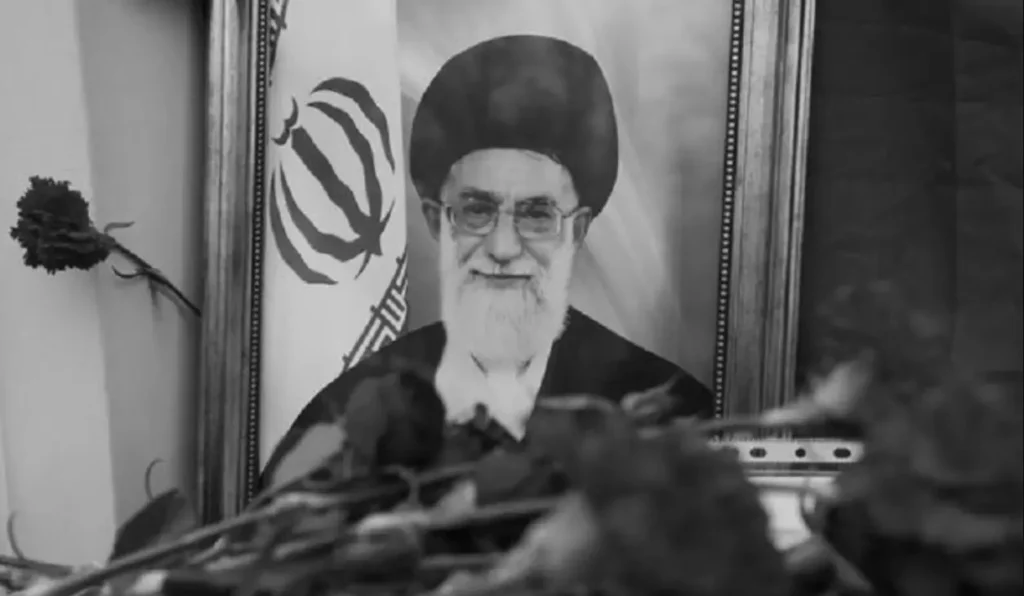
Tehran – Iran has postponed the funeral ceremony of its late Supreme Leader, Ali Khamenei, as US and Israeli military operations continue across the country and tensions spread throughout the Middle East.
Officials said the three-day ceremony, which was scheduled to begin Wednesday night at Tehran’s Grand Mosalla prayer complex, has been delayed due to the large number of people wishing to attend and the need to prepare infrastructure for massive crowds.
The decision comes days after Khamenei was killed in what Iranian authorities described as the first wave of joint US-Israeli strikes on Saturday. He was 86.
Funeral Delayed Amid Security Concerns
Seyyed Mohsen Mahmoudi, head of Tehran province’s Islamic Propaganda Co-ordination Council, told local media that the ceremony would be held at “a more appropriate time.”
Authorities expect millions to attend the funeral. Concerns over security risks during large public gatherings appear to have influenced the postponement as bombardment continues.
State media showed supporters gathering in Tehran to protest against the US and Israeli attacks. At the same time, videos circulating online showed some opponents celebrating in parts of the capital and other cities, highlighting deep divisions within the country.
Iran Prepares to Choose New Supreme Leader
Attention has now turned to the succession process.
Iran’s next supreme leader will be selected by the 88-member Assembly of Experts. One of its members, Ahmad Khatami, said the body is close to identifying a successor.
“The supreme leader will be identified in the closest opportunity. We are close to a conclusion. However, the situation in the country is a war situation,” he told state television.
Two Iranian sources cited by Reuters said Mojtaba Khamenei, the late leader’s 56-year-old son, is considered a leading candidate. Mojtaba is believed to have strong ties with conservative factions and the powerful Islamic Revolutionary Guard Corps (IRGC).
Khamenei had led Iran since 1989, taking over after the death of Ayatollah Ruhollah Khomeini, the founder of the Islamic Republic. As supreme leader, he held ultimate authority over the government, military and judiciary.
US and Israeli Campaign Expands
Meanwhile, military operations continue to intensify.
US Secretary of Defence Pete Hegseth said a US submarine sank an Iranian navy frigate in the Indian Ocean off the coast of Sri Lanka. Sri Lankan authorities reported that 80 bodies had been recovered from the vessel and 32 people rescued, with dozens still missing.
Hegseth also claimed that US and Israeli forces would soon achieve total aerial superiority over Iran.
The Israel Defense Forces (IDF) said more than 100 fighter jets carried out multiple waves of strikes across Iran on Wednesday, dropping around 250 munitions on military facilities in eastern Tehran. Targets reportedly included missile arrays, air defence systems and infrastructure at Mehrabad airport.
The IDF also stated that an Israeli F-35 shot down an Iranian Yak-130 aircraft over Tehran, describing it as a historic first.
There was no immediate confirmation from Iranian authorities regarding the aircraft claim.
Civilian Casualties Rise
The conflict has led to significant civilian casualties on both sides.
Iran’s state news agency reported that 1,045 military personnel and civilians have been killed since the start of the strikes. However, the US-based Human Rights Activists News Agency said the number of civilian deaths had reached 1,097, including 181 children under the age of 10.
In Kuwait, officials said an 11-year-old girl died after being struck by falling shrapnel during an Iranian missile attack. Nine other people, including US service personnel and Kuwaiti soldiers, have also been killed in the country since the conflict began.
In Israel, authorities reported that 10 people have died in missile strikes over the past five days.
Regional Tensions Spread
Iran has launched hundreds of missiles and drones at Israel and Gulf states hosting US military bases.
Iranian President Masoud Pezeshkian said the country had “no choice but to defend ourselves” after diplomatic efforts failed. He stressed that Iran respects the sovereignty of neighbouring countries and does not seek wider conflict.
However, regional leaders have expressed concern.
Qatar’s prime minister reportedly rejected claims that Iranian strikes were aimed only at US targets, pointing to damage to civilian infrastructure. Saudi Arabia said it intercepted a drone near its Ras Tanura oil refinery. Turkey’s defence ministry stated that a missile heading toward its airspace was intercepted by NATO defence systems in the Eastern Mediterranean.
In Qatar, authorities announced the arrest of 10 individuals allegedly linked to the IRGC on suspicion of planning sabotage operations.
Strong Words From Both Sides
The war of words has been as intense as the military campaign.
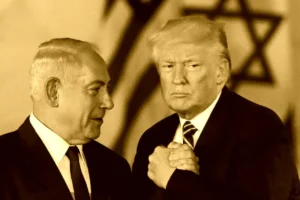
US President Donald Trump suggested that the “worst-case scenario” would be another Iranian leader hostile to US interests.
Israel’s defence minister warned that any successor who continued to threaten Israel would be “an unequivocal target for elimination.”
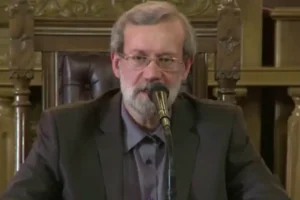
On the Iranian side, senior official Ali Larijani accused Trump of dragging the American people into “an unjust war.”
Uncertain Days Ahead
With air strikes ongoing, naval clashes expanding into the Indian Ocean, and missile exchanges affecting several countries, the region faces one of its most dangerous moments in decades.
At the same time, Iran is preparing for a leadership transition that could reshape its political direction for years to come.
For now, the funeral of Ali Khamenei remains postponed — a powerful symbol of a nation in conflict and uncertainty.

Megan Davies is a reporter for White Pine Tribune. After graduating from the University of Toronto, Megan got an internship at the CBC News and worked as a reporter and editor. Megan has also worked as a reporter for Global Toronto. Megan covers economy and community events for White Pine Tribune.