Tehran — Iran is entering one of the most uncertain periods in its modern history after the reported killing of Supreme Leader Ali Khamenei in joint US-Israel strikes.
The sudden loss of the country’s most powerful figure has shaken the foundations of the Islamic Republic and triggered a growing power struggle — both inside the ruling system and among opposition groups.
For more than three decades, Khamenei stood at the center of Iran’s political and military decision-making. His removal during active conflict has raised serious questions about whether Iran’s leadership structure can handle such a crisis.
Temporary Leadership Takes Charge
Under Iran’s constitution, leadership cannot remain vacant.
Until a new supreme leader is chosen, a temporary council made up of:
- President Masoud Pezeshkian
- Judiciary chief Gholamhossein Mohseni Ejei
- A senior jurist from the Guardian Council
will manage state affairs.
However, this arrangement is only short-term.
The final decision will be taken by the powerful Assembly of Experts, an 88-member clerical body responsible for selecting Iran’s supreme leader.
This process has happened only once before — after the death of revolutionary founder
Ruhollah Khomeini in 1989.
No Clear Successor
Unlike some political systems, Iran has no officially declared heir.
Several possible candidates have been mentioned, but none appear capable of matching Khamenei’s authority.
Possible Contenders Include:
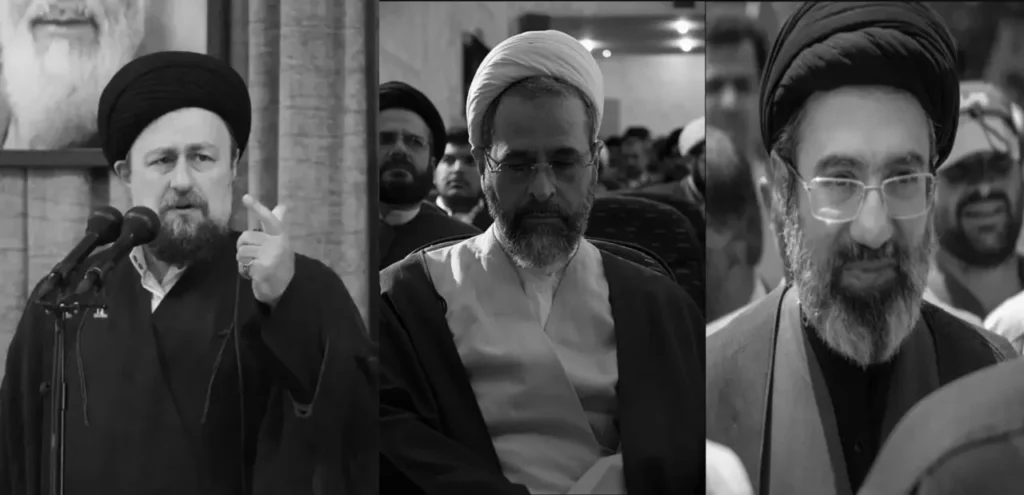
- Mojtaba Khamenei : Seen as a hardline continuity figure with close ties to the Islamic Revolutionary Guard Corps (IRGC). However, dynastic succession is unpopular in revolutionary Iran.
- Hassan Khomeini: Carries strong revolutionary legitimacy but is considered less hardline and lacks strong military backing.
- Alireza Arafi: An institutional insider with administrative experience.
- Mohammad Mehdi Mirbagheri: Represents the ultra-conservative ideological wing.
- Hashem Hosseini Bushehri: Closely linked to succession institutions but maintains a low public profile.
Other influential figures such as Sadeq Larijani, Mohsen Araki, and Ahmad Khatami could also play key roles behind the scenes.
Opposition Voices Enter the Scene
Outside the ruling establishment, opposition leaders are also attempting to shape Iran’s future.
Exiled leader Maryam Rajavi has called for the creation of a democratic republic.
Meanwhile, former crown prince Reza Pahlavi urged Iranians to prepare for a transition, describing recent US actions as aimed at the regime rather than the people.
Both figures have appealed to Iran’s security forces to support democratic change.
The Military Wildcard
Experts warn that the Islamic Revolutionary Guard Corps (IRGC) may become the most decisive force in shaping Iran’s future.
The Guards operate outside the elected government and answer directly to the supreme leader.
Reports that senior commander Mohammad Pakpour was killed in the strikes could reshape internal power dynamics within the military.
Despite losses, the IRGC remains deeply embedded in Iran’s politics, economy, and regional strategy.
Many analysts believe its support will be crucial for any future leader.
A System Under Pressure
Iran’s political system blends elections with clerical oversight.
While citizens elect a president and parliament, ultimate authority lies with the supreme leader.
US President Donald Trump has said there are “good candidates” to lead Iran but declined to name anyone.
Meanwhile, ongoing military pressure raises concerns about whether Iran’s leadership bodies can safely gather to select a successor.
What Comes Next?
The coming weeks could determine whether Iran moves toward:
- Hardline continuity
- Reformist clerical leadership
- Military dominance
- Or a broader political transition
For now, the absence of a clear successor has placed Iran at a historic crossroads — one that could reshape both its domestic system and its role in the Middle East.
Mayur is a part time journalist with about 2 years experience. While working in the field of healthcare, Mayur found a passion for finding engaging stories. As a contributor to White Pine Tribune, Mayur mostly covers International Politics and Life Sciences Related Stories