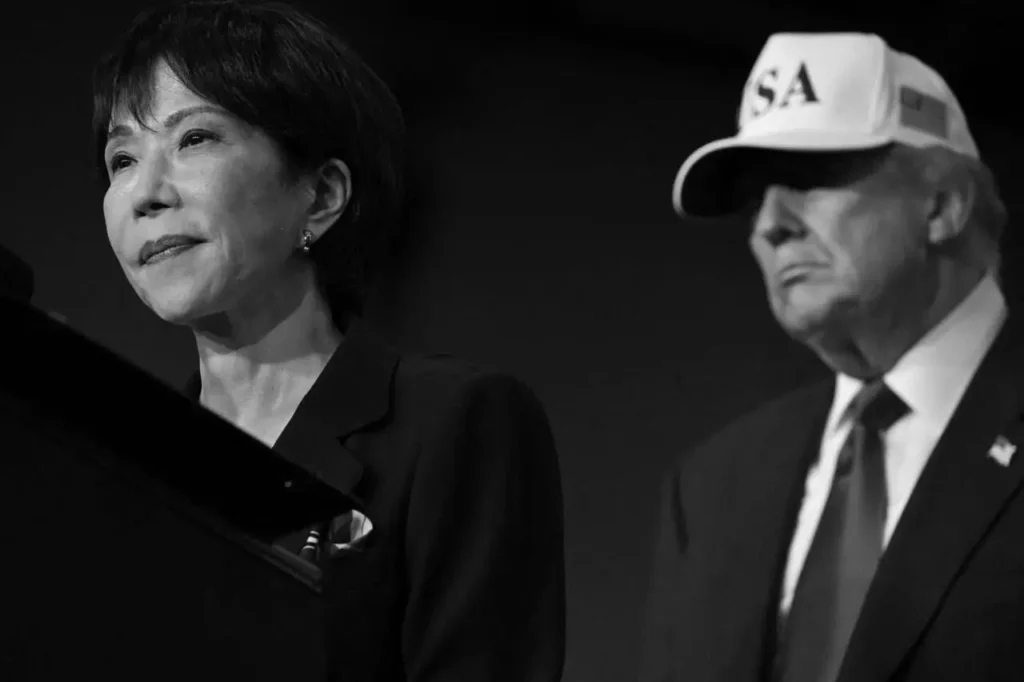
Washington: A joint press briefing between Donald Trump and Sanae Takaichi turned tense after the US President made a controversial reference to Pearl Harbor while speaking about recent military strikes on Iran.
The meeting at the White House came after both leaders held talks on energy cooperation and critical minerals. It also took place amid rising global tensions linked to the ongoing conflict in the Middle East.
The briefing began on a lighter note, with Trump praising Takaichi’s English and joking that there was no need for translation. The Japanese Prime Minister responded briefly, and the exchange drew mild laughter from those present.
However, the tone changed when a reporter asked why the United States had not informed its allies, including Japan, before launching strikes on Iran alongside Israel.
Responding to the question, Trump said secrecy was necessary to maintain the element of surprise. “We didn’t tell anybody because we wanted surprise,” he said.
He then referred to the Attack on Pearl Harbor, adding, “Who knows better about surprise than Japan? Why didn’t you tell me about Pearl Harbor?”
The remark led to an awkward moment in the room. Takaichi, who was listening through a translator, did not respond and appeared uncomfortable as reporters reacted.
The reference to Pearl Harbor carries deep historical significance. On December 7, 1941, Japanese forces carried out a surprise attack on a US naval base in Hawaii, killing more than 2,300 Americans. The attack led to the United States entering World War II.
At the time, then US President Franklin D. Roosevelt described the day as “a date which will live in infamy” while announcing the country’s decision to go to war. The conflict later ended in 1945 after the US dropped atomic bombs on Hiroshima and Nagasaki. The two countries have since built a strong alliance.
Trump defended his approach, saying the surprise strategy helped achieve significant results during the early phase of the operation. He said the strikes caused more damage than expected in the first two days.
“If you tell everybody, it’s not a surprise anymore,” he said.
Despite the moment, Takaichi focused her remarks on global stability. She said the world is facing a serious security situation and warned that the ongoing conflict could affect the global economy. She also expressed confidence in Trump’s ability to help bring peace.
Takaichi raised concerns about tensions in the Middle East, including issues around the Strait of Hormuz, a key route for global oil supply through which nearly one-fifth of the world’s crude passes.
Her visit is seen as significant, as she is among the first allied leaders to meet Trump following the recent US-Israel strikes on Iran. The developments have added to global uncertainty in both security and energy markets.
The briefing highlighted both the cooperation between the two countries and the challenges of diplomacy during sensitive times, as a brief remark brought an unexpected moment of discomfort to an otherwise strategic meeting.

Erin Blanchard graduated from Queens University with a BA in Arts. Erin grew up in Ottawa, but moved to Kingston for her studies. Erin has written for several major publications including the CBC and the Toronto Star. Erin is a community reporter and also covers stories important health developments important to Canadians..