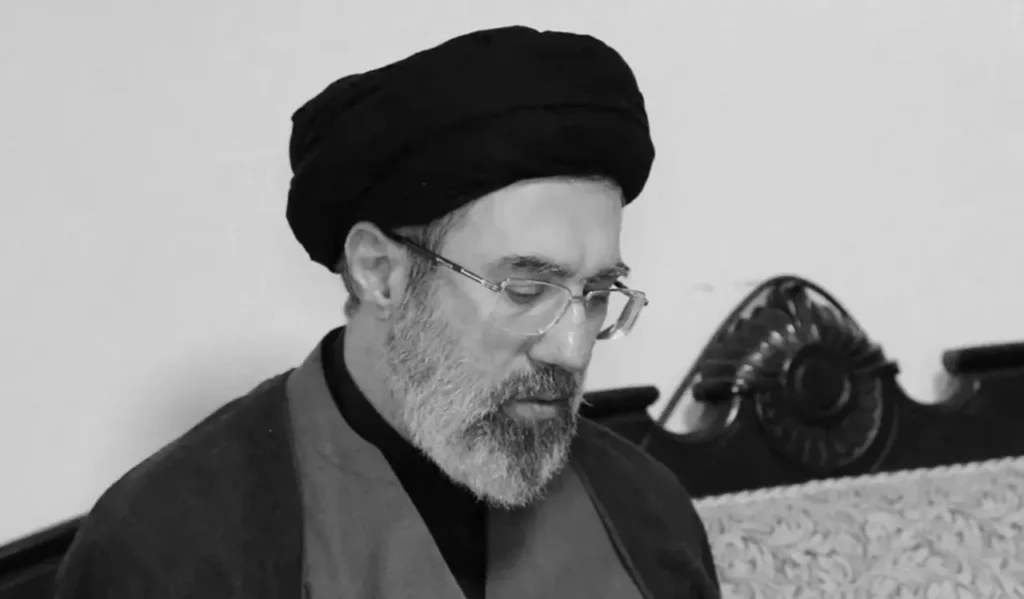
Iran has named Mojtaba Khamenei as the new Supreme Leader after the death of his father Ali Khamenei. The decision comes during a time of war and rising tension in the Middle East.
Ali Khamenei, who led Iran for many years, was killed in a joint strike by the United States and Israel at the start of the conflict. The fighting has now entered its second week.
Iran’s Assembly of Experts, the group that chooses the Supreme Leader, selected Mojtaba Khamenei as his successor. Many experts say this decision shows that Iran’s leadership wants to continue a strong and hardline policy.
Decision Seen as a Message to the United States
The appointment is also seen as a direct message to Donald Trump, who had earlier said that Mojtaba Khamenei would be an unacceptable leader.
By choosing him, Iran’s clerical leadership appears to show that it will not change its position or give in to outside pressure.
Experts say the move means Iran is ready for a longer confrontation rather than compromise.
Supreme Leader Holds the Highest Power
In Iran’s political system, the Supreme Leader is the most powerful person in the country. The leader controls major decisions such as foreign policy, the military, and the country’s nuclear program.
The Supreme Leader also has influence over the government and parliament.
With Mojtaba Khamenei now in power, analysts believe hardline groups will continue to dominate the country’s leadership.
Many expect the Islamic Revolutionary Guard Corps to gain more power. The group already plays a major role in Iran’s security and economy.
Tough Policies Expected
Experts believe the new leader may take strong steps to control the country during the war.
This could include tighter security rules and stronger action against protests or political opposition.
According to analyst Paul Salem, the current situation makes compromise with Western countries very unlikely.
He said leaders who rise during wartime often take tougher positions.
Iran Already Facing Internal Problems
Even before the war, Iran was facing serious economic problems. The country has high inflation, a weak currency, and growing poverty.
Public anger has increased in recent months, leading to protests in different cities.
Experts say the war could make these problems worse and increase pressure on the new leadership.
Personal Loss Could Influence Leadership
Reports say that some members of Mojtaba Khamenei’s family were also killed during the recent strikes.
Former US diplomat Alan Eyre said the new leader is known for his strong views and close ties with Iran’s security forces.
He added that Mojtaba Khamenei has long been supported by powerful military groups.
Religious Leaders Call Khamenei a Martyr
Iran’s clerics have described the death of Ali Khamenei as martyrdom. They compared him to Imam Hussein, a major figure in Shiite Islam known for sacrifice and resistance.
Such comparisons are often used to strengthen public support during difficult times.
Rising Tension in the Region
The situation in the region remains tense. Israeli leaders have warned that Iran’s new Supreme Leader could also become a target in the conflict.
At the same time, Iran has launched missiles and drones that have struck areas in the Gulf region, raising fears that the conflict could spread.
Mojtaba Khamenei studied in the religious schools of Qom and holds the clerical rank of Hojjatoleslam. Over the years, he gained strong influence inside Iran’s political and security system.
The United States Department of the Treasury placed sanctions on him in 2019, saying he acted on behalf of the Supreme Leader even without holding an official government position.
Uncertain Future for Iran
Some experts say Iran’s future could be similar to countries that survived long conflicts but remained isolated, such as Iraq under Saddam Hussein or Syria under Bashar al-Assad.
For now, the appointment of Mojtaba Khamenei shows that Iran’s leadership is choosing a strong and confrontational path as the conflict continues. The coming weeks may decide how the situation develops in the region.

Erin Blanchard graduated from Queens University with a BA in Arts. Erin grew up in Ottawa, but moved to Kingston for her studies. Erin has written for several major publications including the CBC and the Toronto Star. Erin is a community reporter and also covers stories important health developments important to Canadians..