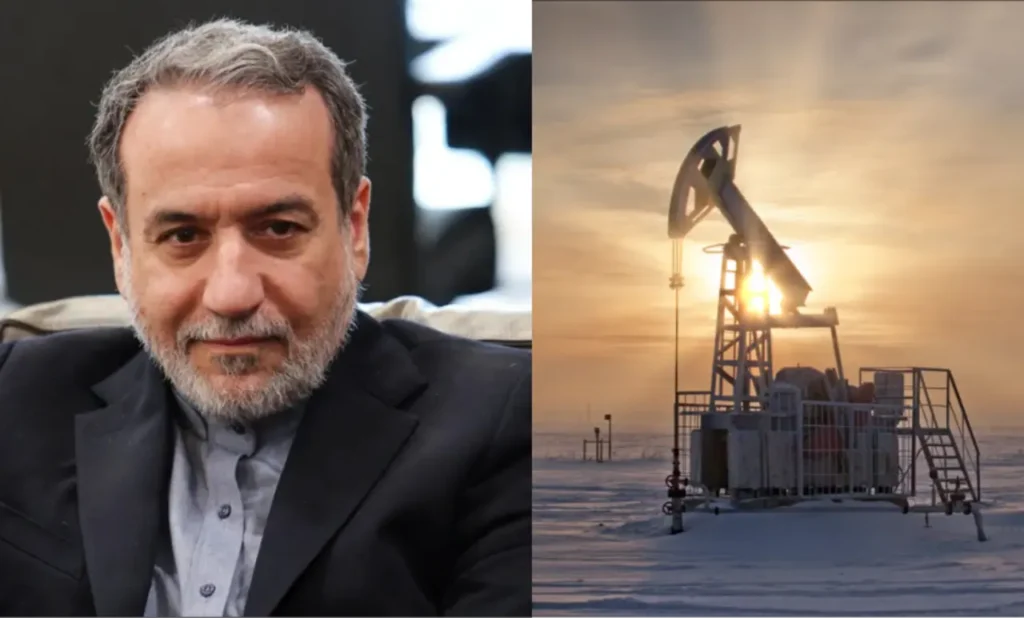
Tensions in the Middle East are rising as the conflict between Iran, the United States, and Israel continues to escalate. Amid the crisis, Iran’s Foreign Minister Seyed Abbas Araghchi has sharply criticized Washington, claiming the White House is now asking countries around the world, including India, to buy oil from Russia despite previously pushing them to stop such purchases.
His remarks come at a time when global energy markets are watching the situation closely, especially as tensions grow around the vital shipping route of the Strait of Hormuz.
Araghchi Accuses US of Changing Its Stand on Russian Oil
In a message posted on the social media platform X, Araghchi claimed the US had spent months pressuring India and other countries to reduce their oil imports from Russia following Western sanctions.
However, he alleged that the situation has now changed.
According to Araghchi, after two weeks of conflict with Iran, the White House is now encouraging countries to purchase Russian crude oil to keep global energy supplies stable.
He also criticized European countries, saying they supported what he described as an “illegal war” against Iran in the hope that Washington would back them in their disputes with Russia.
Conflict Escalates in the Middle East
The latest tensions began after military strikes involving the United States and Israel reportedly targeted Iran on February 28. The attack was said to have killed Iran’s Supreme Leader Ali Khamenei, who was 86 years old, along with several members of his family.
Following the incident, the situation in the region has become increasingly tense.
Reports citing US officials say the Pentagon is deploying additional military forces to the Middle East. The deployment is expected to include around 2,500 Marines and 2,500 sailors, along with several warships aimed at strengthening security in the region.
Strategic Importance of the Strait of Hormuz
A key concern during the crisis is the Strait of Hormuz, one of the world’s most important energy shipping routes.
A significant portion of the global oil supply passes through this narrow waterway that connects the Persian Gulf to international markets. Any disruption in the region can quickly affect global oil prices and supply chains.
Recent reports suggest Iranian actions have targeted maritime traffic in the area, increasing concerns about shipping safety and energy security.
Iran Assures Safe Passage for India-Bound Ships
Despite the tensions, Iran has allowed two India-flagged liquefied petroleum gas (LPG) carriers to pass through the Strait of Hormuz safely. According to reports citing shipping data and industry sources, a tanker carrying Saudi Arabian oil also recently passed through the route and is expected to arrive in India.
Iran’s ambassador to India, Mohammad Fathali, confirmed that Tehran will continue to provide safe passage for vessels heading to India through the strategic waterway.
He emphasized that Iran and India share long-standing ties and common interests, adding that both countries have maintained friendly relations over the years.
India’s Role in Global Energy Trade
India remains one of the world’s largest energy importers and maintains oil trade relations with several major producers, including Russia and Middle Eastern countries.
Because of this position, India has become an important player in global energy markets, especially during times of geopolitical tension. The country continues to balance its diplomatic relations with multiple global powers while focusing on securing stable energy supplies for its economy.
Global Markets Watching the Situation
As the conflict in the Middle East continues, analysts say the situation around the Strait of Hormuz will remain a key factor for global energy markets. Any disruption in shipping routes could impact oil supplies and prices worldwide.
For now, international attention remains focused on how the conflict develops and whether diplomatic efforts can prevent further escalation in the region.

Andy Roberts is a seasoned journalist with nearly 9 years experience. While studying journalism at Ryerson, Annie found a passion for finding engaging stories. As a contributor to White Pine Tribune, Annie mostly covers provincial and national developments..