In a major and unprecedented move, Lebanon has announced an immediate ban on the military and security activities of Hezbollah, marking a serious shift in the country’s internal and regional position as tensions with Israel sharply rise.
Prime Minister Nawaf Salam confirmed that the government has formally prohibited all armed operations by Hezbollah outside the control of the state. He said such activities are now considered illegal and ordered Lebanese security forces to prevent any further missile or drone launches from the country’s territory.
The decision came just hours after Hezbollah claimed responsibility for launching rockets and drones toward Israel early Monday. The group described the attack as retaliation for the killing of Iranian Supreme Leader Ali Khamenei in recent US-Israeli strikes.
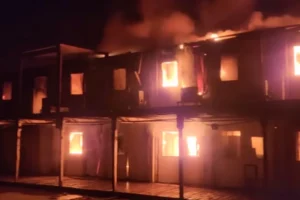
Israel responded swiftly by launching air raids on the southern suburbs of Beirut and multiple locations across southern Lebanon. According to Lebanese health authorities, the strikes killed at least 31 people and injured 149 others.
Following an emergency cabinet meeting, Salam made it clear that the Lebanese state rejects any military action carried out without official approval. He also instructed the army and security agencies to take immediate steps to enforce the ban and prevent further escalation.
Lebanon’s Justice Minister Adel Nassar confirmed that judicial authorities have ordered security agencies to arrest those responsible for launching the rockets and anyone involved in planning the attacks.
Despite Hezbollah being part of Lebanon’s political system and holding seats in both parliament and government, the cabinet decision reportedly received support from ministers aligned with the group’s ally, the Amal Movement.
Meanwhile, Israel intensified its military response by targeting Hezbollah-linked infrastructure, including buildings associated with Al-Qard al-Hassan, a financial institution previously sanctioned by Washington.
Israeli forces also issued evacuation warnings for several towns in southern and eastern Lebanon, raising fears of a worsening humanitarian situation. Reports from the ground indicate that hundreds of thousands of civilians have begun fleeing affected areas.
The escalation comes despite a ceasefire agreement reached in November 2024 after a year-long conflict between Israel and Hezbollah. Although Lebanon had earlier agreed to gradually disarm the group, Hezbollah rejected full disarmament and insisted that previous agreements applied only to specific southern regions.
Lebanon is now calling on international stakeholders, including the United States and France, to pressure Israel to halt its attacks and support renewed negotiations.
The situation remains tense, with schools and universities across Lebanon ordered to shut down due to security concerns. The US Embassy has also urged its citizens to leave the country immediately, warning that the security environment is volatile and unpredictable.
Lebanon’s leadership has expressed its readiness to resume talks under international supervision, hoping to prevent the country from being drawn deeper into a broader regional conflict.

Clyde Evans is the lead editor for White Pine Tribune. Clyde has been working as a freelance journalist for nearly a decade having published stories in many print and digital publications including, the Financial Post and the Huff Post Canada. Clyde is based in Toronto and covers issues affecting his city and province. When he’s not busy writing, Trevor enjoys canoeing.