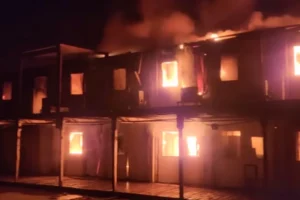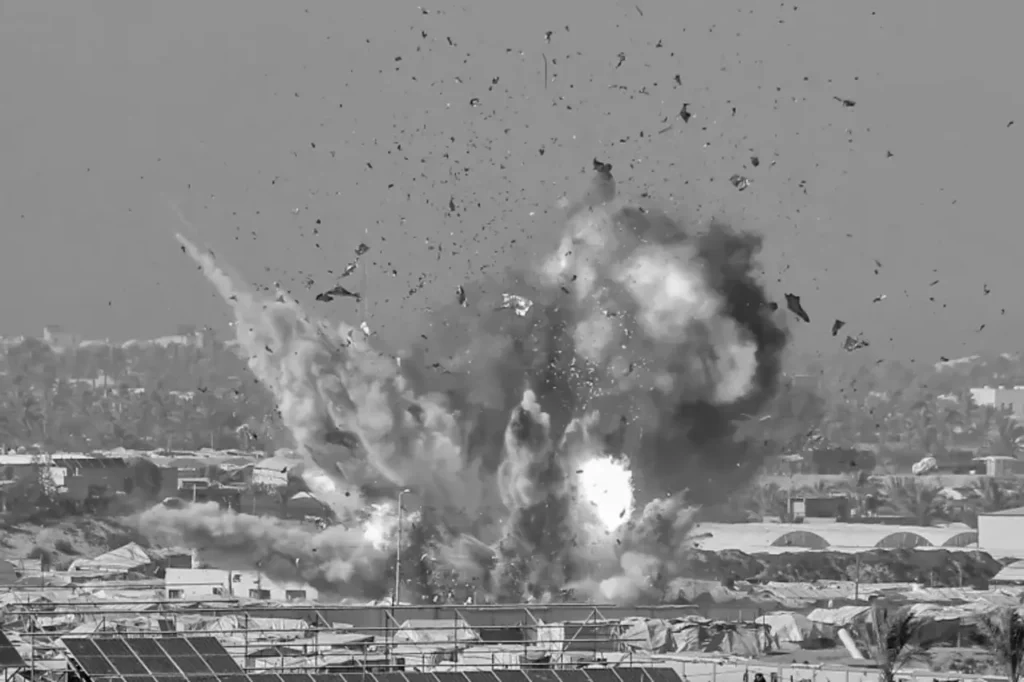
Tensions between Pakistan and Afghanistan have sharply increased after Pakistan carried out airstrikes on Kabul, Kandahar and other locations.
Pakistan’s Defence Minister Khawaja Asif said the country’s “patience has run out” following earlier attacks on Pakistani military posts along the border. He described the situation as an “open war”.
Afghanistan confirmed that Pakistani strikes hit several areas including Kabul and Paktia province, although it claimed there were no casualties.
Gunfire and shelling were also reported near the important Torkham border crossing, showing how quickly the situation has worsened.
Conflict Rooted in Border Tensions
The latest escalation came after Afghanistan said it had launched large-scale attacks on Pakistani military positions near the shared border.
Afghan officials claimed dozens of Pakistani soldiers were killed and military posts destroyed. Pakistan responded with airstrikes, saying Taliban positions were targeted.
Pakistan has long accused Afghanistan of allowing militant groups to use its territory to launch attacks inside Pakistan. Afghan leaders have denied this.
Pakistan’s Prime Minister Shehbaz Sharif said the country stands united behind its armed forces and warned that any aggression would receive a strong response.
Former Afghan President Hamid Karzai said Afghans would defend their homeland and urged Pakistan to adopt better relations.
A Familiar Battlefield for Global Powers
Afghanistan has a long history of resisting stronger armies.
The former Soviet Union fought a decade-long war there before withdrawing.
Later, a US-led coalition stayed in Afghanistan for nearly 20 years after the 9/11 attacks.
Both experienced the challenges of fighting in Afghanistan’s harsh terrain and complex local environment.
Now, Pakistan may be entering a similarly unpredictable situation.
Military Strength: Pakistan Holds the Edge
In terms of military power, Pakistan has a clear advantage.
According to global rankings:
- Pakistan stands 14th in military strength
- Afghanistan ranks 121st
Pakistan has:
- Around 6.6 lakh active personnel
- Thousands of armoured vehicles
- Strong artillery
- Nearly 465 combat aircraft
Afghanistan has:
- About 1.72 lakh fighters
- Very limited air capability
- Mostly old equipment left behind by US forces
Pakistan also benefits from defence cooperation with China and has modernised parts of its military.
It is also a nuclear-armed nation, unlike Afghanistan.
Air Power Gives Pakistan Early Advantage
Pakistan’s Air Force can dominate Afghan skies.
Afghanistan has:
- No fighter jets
- Only a few ageing aircraft
- Limited air defence
This gives Pakistan an upper hand in any short-term conventional conflict.
But Afghanistan Has One Key Strength
Despite weaker weapons, Afghanistan’s biggest strength is experience in guerrilla warfare.
For decades, Afghan fighters have used:
- Mountain terrain
- Hit-and-run tactics
- Ambush strategies
This helped them resist both Soviet and Western forces in the past.
Experts warn that if the conflict becomes long, Pakistan could face serious challenges.
Global Concern Grows
The international community is watching closely.
The United Nations, led by Secretary-General Antonio Guterres, has called for restraint and urged both sides to resolve issues through dialogue.
Countries including Iran and Russia have also suggested diplomatic solutions.
Former US envoy Zalmay Khalilzad warned that continued attacks could lead to a dangerous cycle of retaliation.
Short War vs Long War
Pakistan may have the advantage in a quick military campaign.
However, history shows Afghanistan has the ability to turn wars into long struggles.
If the conflict continues, Afghanistan’s guerrilla tactics and terrain could make it difficult for Pakistan to achieve lasting success.
The situation has moved beyond border tension and now risks becoming a prolonged conflict.
While Pakistan holds military superiority, Afghanistan’s resilience could shape how this confrontation unfolds.
The coming days will decide whether diplomacy returns — or whether the region moves deeper into conflict.

Erin Blanchard graduated from Queens University with a BA in Arts. Erin grew up in Ottawa, but moved to Kingston for her studies. Erin has written for several major publications including the CBC and the Toronto Star. Erin is a community reporter and also covers stories important health developments important to Canadians..