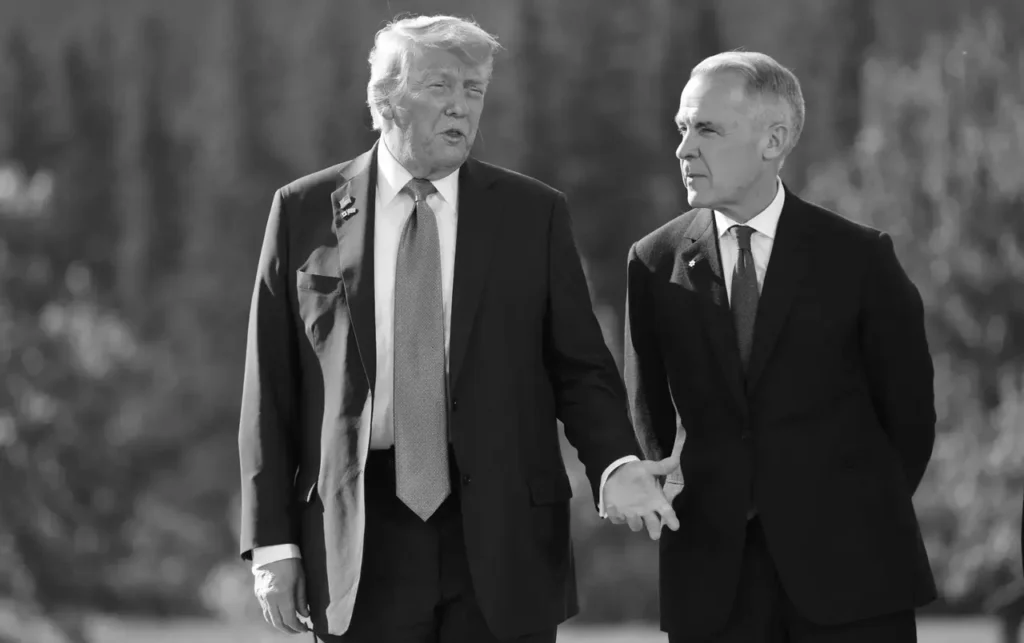
Fresh tensions have emerged between the United States and Canada after President Donald Trump and senior US officials warned that Canada could face steep tariffs if it deepens trade ties with China. In response, Canadian Prime Minister Mark Carney has said clearly that Ottawa is not pursuing a free trade agreement with Beijing.
The dispute has added strain to already fragile US-Canada relations and raised concerns among businesses and policymakers on both sides of the border.
US Threatens 100% Tariffs on Canadian Goods
The warning came after US Treasury Secretary Scott Bessent said the United States would not allow Canada to become a gateway for cheap Chinese goods entering the American market.
“We can’t let Canada become an opening that the Chinese pour their cheap goods into the US,” Bessent said during a television interview. He added that 100% tariffs were possible if Canada moved forward with a broader trade deal with China.
Trump echoed the message on social media, accusing China of “taking over” Canada and warning that Ottawa would face serious consequences if it allowed Chinese exports to bypass US trade barriers.
Canada Denies Any Free Trade Deal With China
Prime Minister Mark Carney moved quickly to calm fears, saying Canada has “no intention” of signing a free trade agreement with China.
Carney said Canada remains fully committed to its obligations under the Canada-US-Mexico Agreement (CUSMA), which requires advance notification before any trade deal with a non-market economy.
“What we have done with China is to fix specific trade issues that developed over the past few years,” Carney said, stressing that recent talks with Beijing were limited and practical, not strategic.
What Canada and China Actually Agreed On
Earlier this month, Canada and China reached a preliminary agreement aimed at easing existing trade tensions.
Under the arrangement:
- China will reduce tariffs on Canadian canola oil to about 15% from March 1, down from more than 80%
- Canada will allow 49,000 Chinese electric vehicles per year under a reduced tariff rate of 6.1%
- Chinese tariffs on some Canadian agricultural products, including seafood and peas, will remain suspended until at least 2026
Canadian officials say the deal is capped, controlled, and designed to stabilise trade rather than open markets widely.
Trump’s Mixed Signals Add to Uncertainty
While Trump has recently threatened Canada with punitive tariffs, his past comments have been inconsistent. After the Canada-China agreement was first announced, Trump publicly said that striking a deal with China could be “a good thing” for Canada.
However, his tone later shifted sharply, with renewed warnings and social media attacks aimed at Ottawa’s China policy.
Broader Tensions Behind the Trade Dispute
The tariff threat comes amid wider political friction between Washington and Ottawa. Trump recently withdrew Canada’s invitation to join his proposed “Board of Peace”, following comments by Carney at the World Economic Forum warning against economic coercion by major powers.
Canada has also been affected by existing US tariffs, with duties of up to 35% applied to some Canadian steel, metals, and auto-related products outside CUSMA protections.
What Comes Next
For now, Canada is trying to walk a careful line — maintaining limited trade engagement with China while reassuring the US that it is not undermining North American trade rules.
Whether Trump follows through on his tariff threat remains uncertain, but the episode highlights how quickly trade and diplomacy can collide in an already tense global economic environment.

Mayur is a part time journalist with about 2 years experience. While working in the field of healthcare, Mayur found a passion for finding engaging stories. As a contributor to White Pine Tribune, Mayur mostly covers International Politics and Life Sciences Related Stories